Building Classroom Community Through Equitable Participation
Classroom community is not built by decorations or rules alone. It is built by the everyday moments when students feel seen, safe, and invited to contribute. The simplest signal of belonging is voice: who gets to speak, how often, and with what level of respect. When participation is equitable, students learn a deeper lesson than content: this community includes me.
Belonging
Students feel included when their voice is part of the routine, not an exception.
Safety
Predictable participation lowers the fear of being put on the spot.
Shared Work
Participation becomes a collective responsibility, not a volunteer competition.
Community grows where voice is shared
Research on schools consistently shows that relationships and trust are not soft outcomes; they are core resources for improvement and engagement. When students experience reliable, respectful interactions with adults, they show stronger engagement and achievement, and schools become more resilient communities.123 A strong sense of belonging is repeatedly linked to motivation, behavior, and academic outcomes, especially in secondary settings.4
Equitable participation is one of the most visible ways students experience that trust. When the same few voices dominate, others receive a steady message that their ideas are optional. Studies of whole-class discussion show that participation often skews sharply toward a small group, even when the class is demographically balanced.5 A community built on uneven voice feels fragile. A community built on shared voice feels safe.
Equitable participation is a trust practice
Trust grows through consistent, transparent routines. When students know that participation will be fair, that they will not be surprised or embarrassed, and that their ideas will be treated with respect, they take more risks. Student voice research shows that authentic opportunities to contribute increase engagement and agency, especially for students who are often quieter or marginalized in group settings.6
Equitable participation is not about forcing every student to speak in the same way. It is about building a culture where participation is expected, supported, and predictable. The routine is the trust.
A community-building participation routine
You do not need a brand-new system to build this. You need a few reliable moves that make equity visible. Here is a routine that keeps the focus on community and trust:
Normalize the why
Make shared voice a community value, not a compliance rule.
Lower the risk
Start with a quick write, partner share, or response card.
Make it predictable
Use a transparent rotation or queue so students can prepare.
Protect dignity
Acknowledge contributions and avoid gotcha moments.
Track patterns
Notice who is quiet over time and reopen the door.
Community Check
If you want to know whether your participation system is building trust, ask these three questions: Who has spoken in the last week? Who is consistently silent? Do students expect participation to be fair? If the answer to any of these is no, trust is weakening.
When participation is equitable, trust becomes visible
Students read the room. When participation is predictable and shared, it sends powerful signals:
- I belong here. My ideas are part of the class story.
- I am safe. I will be called on fairly and respectfully.
- This is our work. Learning is a shared responsibility, not a spectator sport.
These signals are not just social. They are academic. When students trust the process, they are more willing to try, share, and revise their thinking in public.
How PrepPanel supports an equitable participation culture
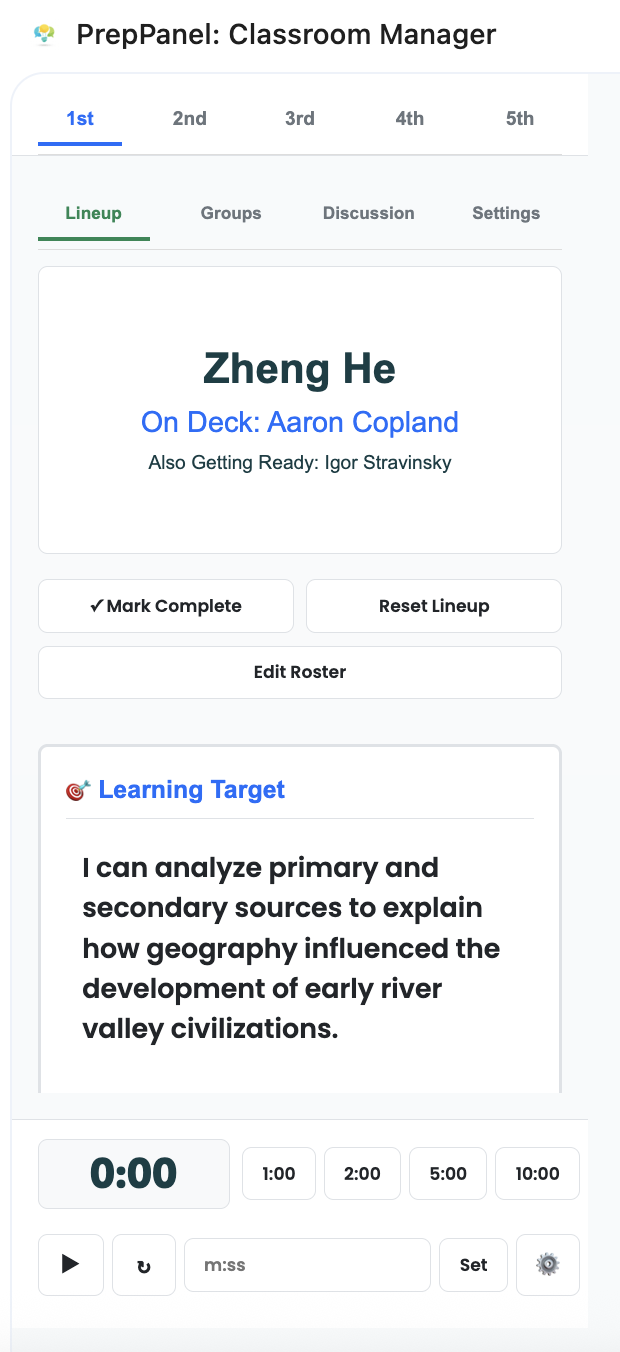
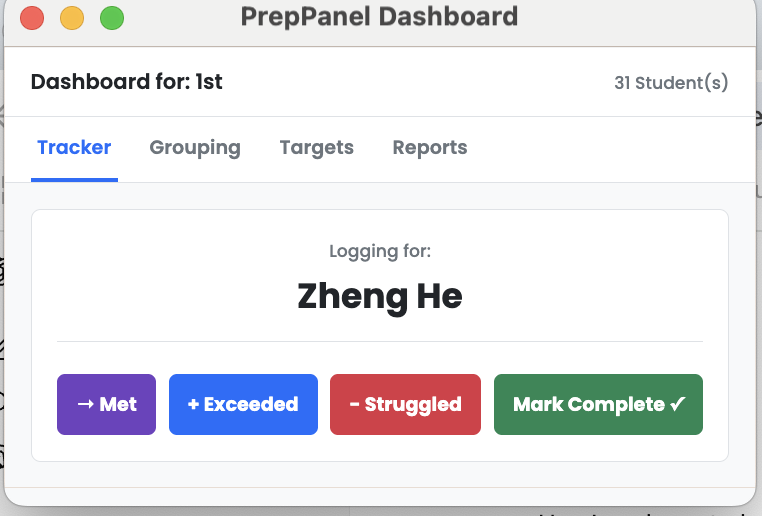
PrepPanel was built to make these routines easier to run consistently. Its queue-based calling provides a transparent, predictable participation system that helps students see their turn coming. The discussion protocol library helps you vary entry points. The participation tracker lets you see patterns over time so you can protect equity, not just hope for it.
In short: you manage the community. PrepPanel manages the workflow. For a step-by-step walkthrough, see the Random Picker how-to guide →
"A strong classroom community is not a feeling. It is a system that makes belonging visible."
Start small, build trust fast
Choose one routine that makes participation more equitable. Teach it explicitly. Run it consistently. Then watch how the room changes. When students see that voice is shared, trust grows. When trust grows, community follows.
References
- Bryk, A. S., & Schneider, B. (2002). Trust in Schools: A Core Resource for Improvement. https://consortium.uchicago.edu/publications/trust-schools-core-resource-improvement
- Roorda, D. L., Koomen, H. M. Y., Spilt, J. L., & Oort, F. J. (2011). The influence of affective teacher-student relationships on students' school engagement and achievement. https://doi.org/10.3102/0034654311421793
- Allen, K. A., Kern, M. L., Vella-Brodrick, D., Hattie, J., & Waters, L. (2018). What schools need to know about fostering school belonging. https://doi.org/10.1007/s10648-016-9389-8
- Korpershoek, H., Canrinus, E. T., Fokkens-Bruinsma, M., & de Boer, H. (2019). The relationships between school belonging and students' motivational, social-emotional, behavioral, and academic outcomes. https://doi.org/10.1080/02671522.2019.1615116
- Eddy, S. L., Brownell, S. E., & Wenderoth, M. P. (2014). Gender gaps in achievement and participation in multiple introductory biology classrooms. https://pmc.ncbi.nlm.nih.gov/articles/PMC4152209/
- Mitra, D. (2006). Student voice in school reform: From listening to leadership. https://journals.library.ualberta.ca/iejll/index.php/iejll/article/view/622