Grouping and Seating That Work in Real Classrooms
Grouping and seating are not minor details. They quietly shape who talks, who focuses, and who feels connected. The research is clear on one point: there is no single best arrangement for every task. What works depends on purpose, group size, and the kind of learning you are trying to create.14
Small groups help, but results vary
Meta-analysis evidence shows a modest overall gain for small group instruction, with wide variation by context and design.1
Group size matters
Small groups of 3 to 4 students show stronger effects than larger groups in the research synthesis.1
Composition is not one size fits all
No consistent winner for homogeneous vs heterogeneous grouping across all students and contexts.1
What the research suggests for grouping
Across many studies, small group instruction shows a modest average gain, but results vary widely. The strongest patterns point to groups built from more than one piece of information, small group sizes of 3 to 4, and teachers who plan for group instruction rather than improvising it.1
So the key question is not “Do groups work?” It is “What is this group for, and how will the task support it?” That framing keeps grouping flexible and purpose-driven.1
Practical grouping takeaway
Use groups when the task benefits from peer interaction or multiple perspectives, keep the size small, and rely on more than one piece of information to build the groups. That is what the evidence supports, and it keeps you away from one factor decisions.1
Seating has academic and social effects
Seating research shows a clear pattern. Rows tend to boost on-task behavior for independent work, while clusters make interaction easier for discussion and collaboration. The takeaway is simple. Match the arrangement to the task, not habit or tradition.4
Seating also shapes relationships. Students seated near one another are more likely to become friends, and randomized seating experiments show proximity can create new friendships. So seating decisions affect both focus and belonging.23
Rows for focus
Rows support on-task behavior for independent or direct instruction work.4
Clusters for collaboration
Clusters increase peer interaction during discussion or group tasks.4
Where PrepPanel actually supports the evidence
PrepPanel does not replace instructional design, but it can reduce the friction of doing evidence-aligned grouping and seating.
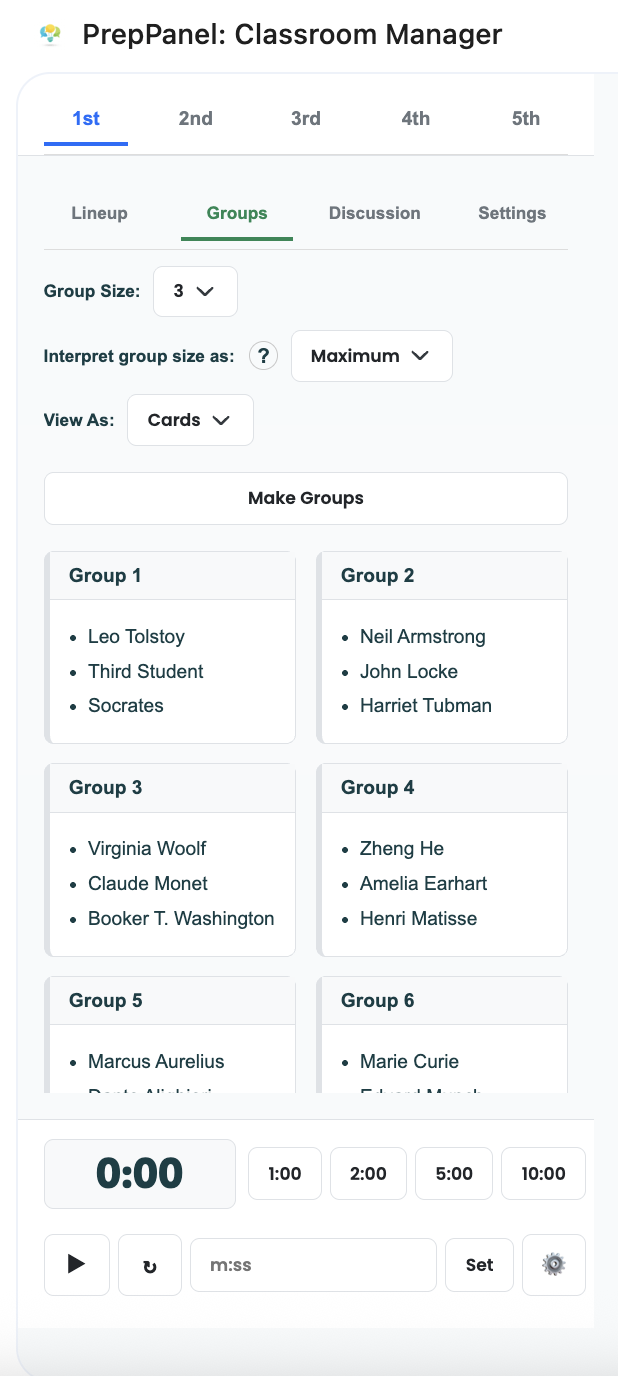
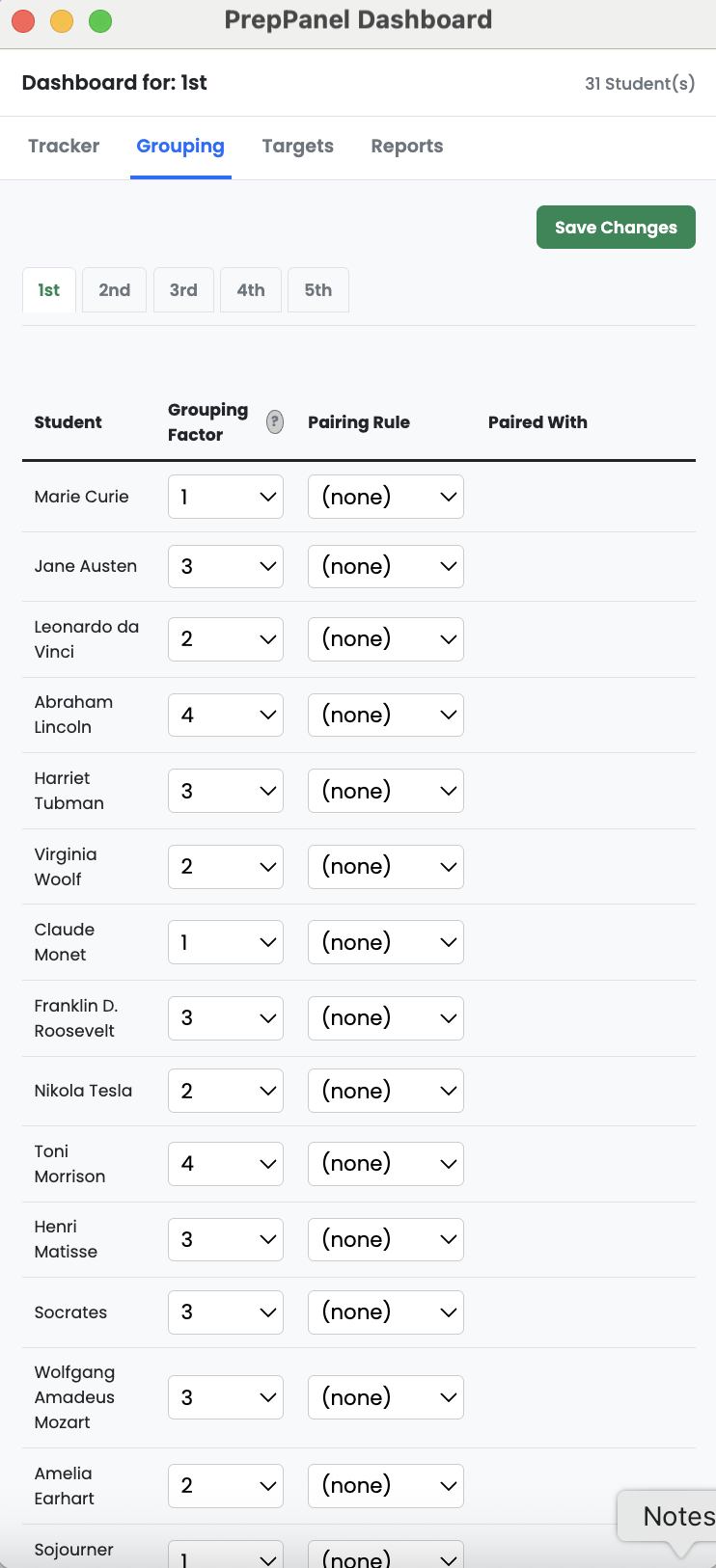
- Group generator with rules. Create small groups quickly, enforce “always with” and “never with” pairings, and use a grouping factor for more than one criterion when building groups.5
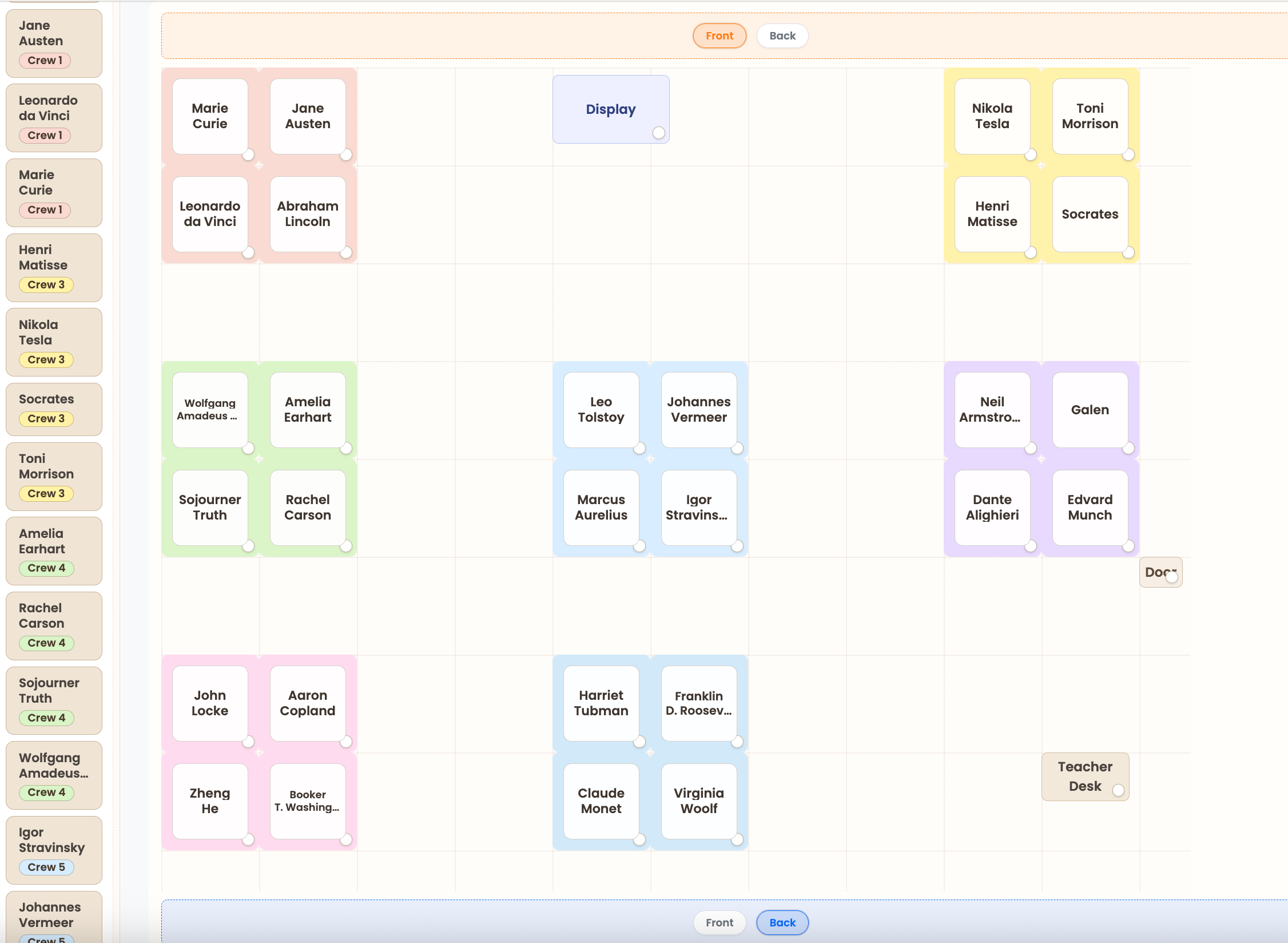
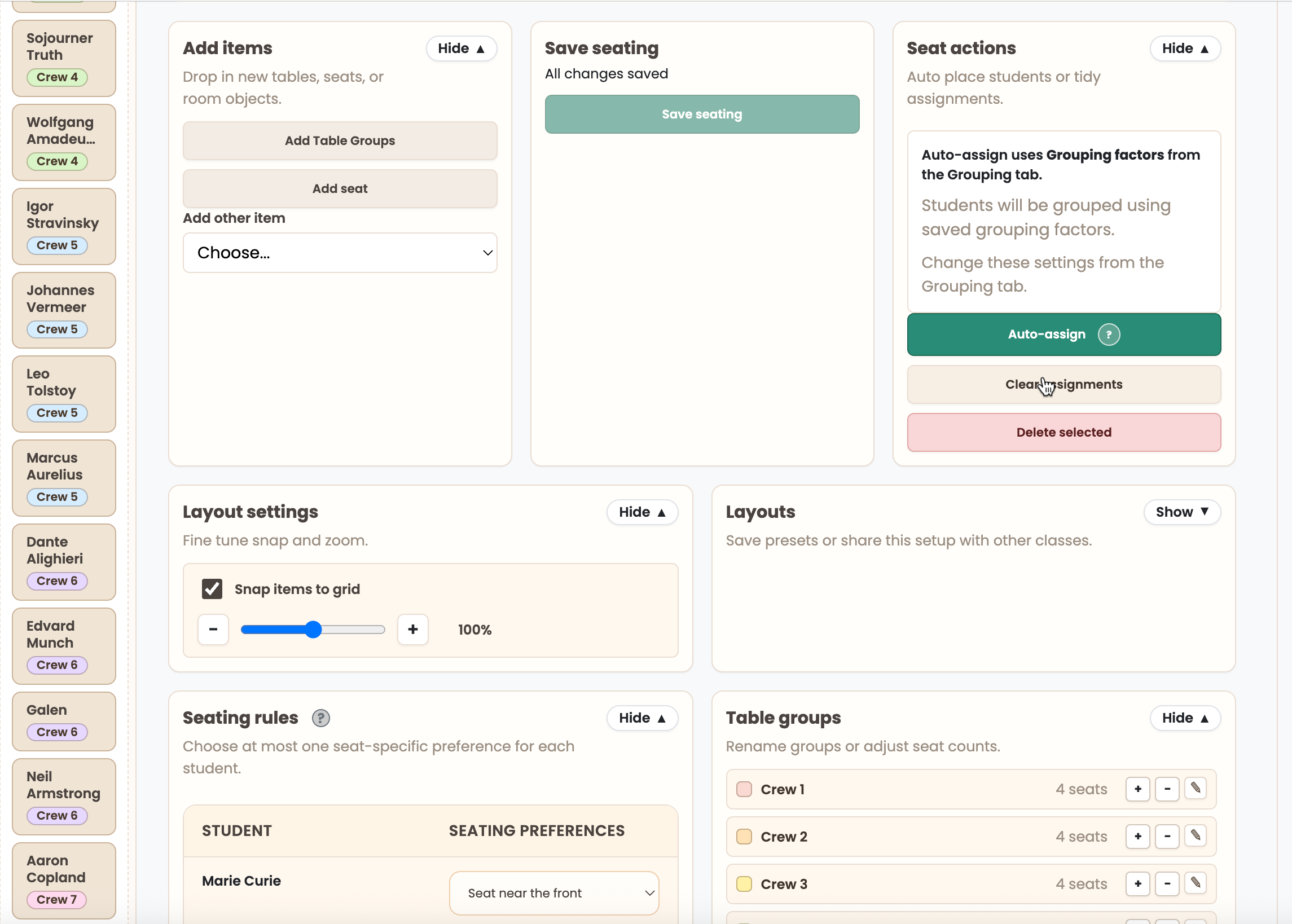
- Seating chart with constraints. Build table groups, then auto-balance seats while honoring your rules, which supports the idea that proximity affects both interaction and relationships.6
For a step-by-step walkthrough of both features, see the Groups & Seating how-to guide →
“The task should dictate the seating arrangement.”4
The honest bottom line
The research does not say that one grouping method or one seating pattern is always best. It says that small groups can help, that composition and size matter, and that seating should match the task and social goals. PrepPanel helps you act on those findings quickly, but the instructional purpose still comes from you.14
References
- National Research Council. (2002). Weighing the Benefits of Placement. Minority Students in Special and Gifted Education. https://nap.nationalacademies.org/read/10128/chapter/11
- Faur, S., & Laursen, B. (2022). Classroom Seat Proximity Predicts Friendship Formation. Frontiers in Psychology. https://www.frontiersin.org/journals/psychology/articles/10.3389/fpsyg.2022.796002/full
- Rohrer, J. M., Keller, T., & Elwert, F. (2021). Proximity can induce diverse friendships: A large randomized classroom experiment. PLOS ONE. https://pmc.ncbi.nlm.nih.gov/articles/PMC8357142/
- van den Berg, Y. H. M., Segers, E., & Cillessen, A. H. N. (2016). Considerations for classroom seating arrangements and the role of teacher characteristics and beliefs. Social Psychology of Education. https://link.springer.com/article/10.1007/s11218-016-9353-y
- PrepPanel: Classroom Manager. Chrome Web Store listing. https://chromewebstore.google.com/detail/preppanel-classroom-manag/ejmggijkmlahcchnfdlhhdlbbelhlfcj
- PrepPanel Classroom Manager website. https://preppanelclassroom.com/